

A 2023 study published in the Journal of Cutaneous and Aesthetic Surgery found that patients who completed four microneedling sessions reported a 40–50% improvement in skin texture and a measurable reduction in fine lines within 90 days.
That kind of clinical outcome is why collagen induction therapy has moved from dermatology offices into mainstream aesthetics.
Yet most people still walk into their first appointment with only a vague sense of what’s actually happening to their skin, what results are realistic, and what separates a transformational outcome from a mediocre one.
The core science is straightforward: microneedling creates thousands of controlled micro-injuries using fine, sterile needles, triggering the body’s wound-healing cascade. That response produces new collagen and elastin, the two structural proteins responsible for firm, smooth, youthful-looking skin.
At SKN Shack, this process is calibrated to each patient’s skin type, concerns, and goals, because depth, device quality, and aftercare protocol all determine whether results are significant or forgettable.
Whether you’re dealing with acne scarring, uneven tone, fine lines, or enlarged pores, understanding the full picture before your first session makes a real difference. This guide covers the science, the process, realistic timelines, costs in the Thompson’s Station area, and how to choose a provider who will actually deliver.
Key Takeaways
- Microneedling stimulates collagen and elastin production by creating controlled micro-injuries in the skin, making it effective for scarring, fine lines, texture, and hyperpigmentation.
- Results are cumulative. Most patients need 3–6 sessions spaced 4–6 weeks apart to achieve optimal outcomes, with full collagen remodeling continuing for up to six months after treatment.
- Device quality and provider training matter more than most people realize. Professional-grade devices used in a clinical setting produce significantly different results than at-home rollers.
- Downtime is minimal but real. Expect 24–72 hours of redness and mild sensitivity, with most patients returning to normal activity the following day.
- Microneedling pairs well with other treatments such as chemical peels and IPL, and a qualified provider will help you sequence them correctly for maximum benefit without overloading the skin.
Table of Contents
- Key Takeaways
- How Microneedling Works: The Science Behind Needle Depth Protocols
- The Treatment Process & Post-Treatment Timeline: Hour by Hour
- 2026 Adjunct Therapies: PDRN, Insulin Combos & What the Research Shows
- At-Home vs. Professional Microneedling in 2026: What the FDA Changes Mean for You
- Frequently Asked Questions
How Microneedling Works: The Science Behind Needle Depth Protocols
Microneedling operates on a principle called collagen induction therapy (CIT). A device creates thousands of controlled micro-channels in the skin, triggering the body’s wound-healing cascade. That response releases growth factors, including platelet-derived growth factor (PDGF) and transforming growth factor-beta (TGF-β), which stimulate the production of new collagen and elastin fibers.
The result is measurable. A 2023 study published in the Journal of Cosmetic Dermatology found that patients who completed four microneedling sessions showed a 30–40% increase in collagen density at a 12-week follow-up. That structural change is what produces visible improvements in skin texture, tone, and firmness, not just surface-level smoothing.
Needle Depth Protocols by Skin Concern
Depth calibration is where professional microneedling separates itself from at-home tools. Think of it like adjusting the blade depth on a precision instrument: the wrong setting either does nothing or creates unnecessary damage. Different skin concerns require different penetration depths, and using the wrong depth either produces no result or risks unnecessary irritation.
- 0.5mm: Surface texture refinement, enlarged pores, and enhanced serum absorption
- 1.0–1.5mm: Fine lines, mild hyperpigmentation, and uneven skin tone
- 2.0–2.5mm: Deep acne scars, rolling scars, and stretch marks
Needle Depth Reference Guide
| Needle Depth | Target Concern | Expected Sessions | Downtime Level |
|---|---|---|---|
| 0.5mm | Texture, pores, product absorption | 2–3 sessions | Minimal (24–48 hrs) |
| 1.0mm | Fine lines, early hyperpigmentation | 3–4 sessions | Mild (2–3 days) |
| 1.5mm | Moderate wrinkles, sun damage | 4–6 sessions | Moderate (3–4 days) |
| 2.0–2.5mm | Deep acne scars, stretch marks | 6+ sessions | Moderate–High (4–5 days) |
Professional Devices vs. At-Home Rollers
Licensed providers use FDA-cleared devices like the SkinPen and Dermapen, which deliver precise, consistent needle depth with single-use, sterile cartridges. Radiofrequency microneedling platforms, such as Morpheus8, add thermal energy at depth for enhanced skin tightening, making them particularly effective for patients managing both laxity and texture concerns simultaneously.
At-home dermarollers, while FDA-cleared for cosmetic use, operate at fixed depths typically under 0.3mm. They cannot replicate clinical protocols, and because they are rarely sterilized properly between uses, they carry a real risk of bacterial contamination and micro-tears that worsen texture over time.
Expert note: Depth calibration should always account for skin thickness, which varies by facial zone. The periorbital area requires significantly shallower settings than the cheeks or forehead.
The Treatment Process & Post-Treatment Timeline: Hour by Hour
A microneedling appointment typically runs 60 to 90 minutes from start to finish. Understanding each phase helps you arrive prepared and reduces the anxiety that often accompanies a first treatment.
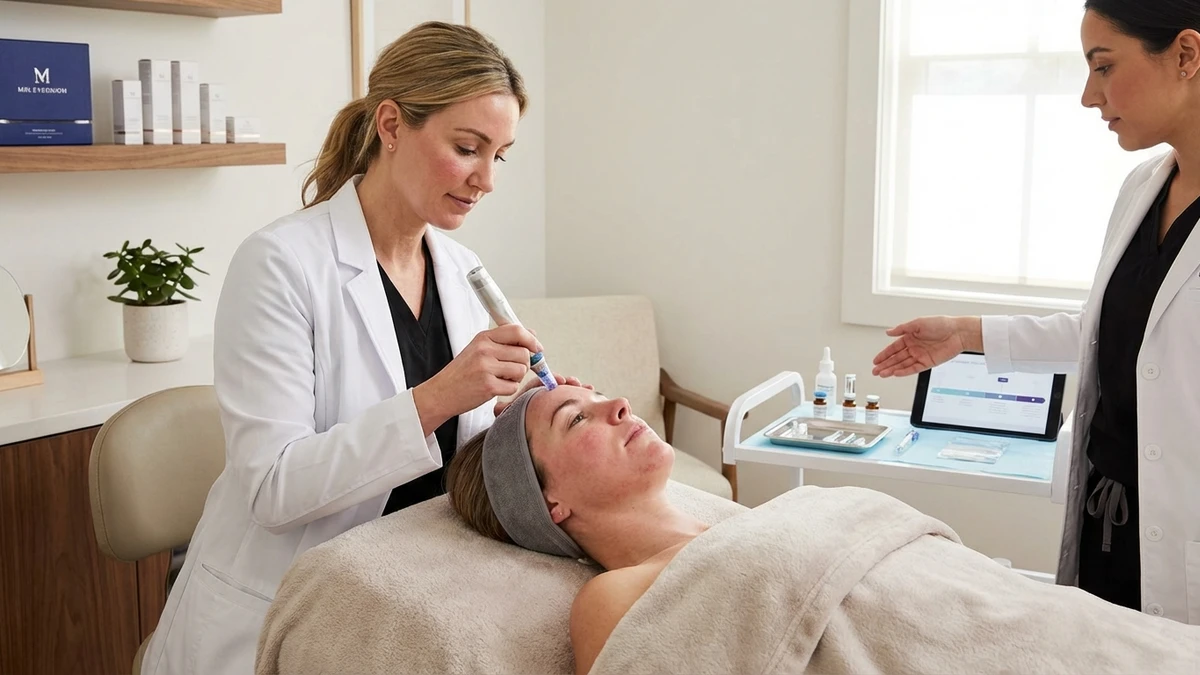
In-Clinic Process:
- Consultation and skin assessment — Your provider evaluates skin tone, active concerns, and contraindications before any device is introduced.
- Topical numbing cream application — A prescription-strength anesthetic is applied and left on for 20 to 30 minutes, ensuring the treatment remains comfortable throughout.
- The microneedling pass — The actual treatment takes 30 to 45 minutes depending on the area treated. Full face and neck coverage requires more time than targeted zones.
- Immediate post-care application — A calming serum, hyaluronic acid, or growth factor product is applied directly after treatment to support the skin’s initial healing response.
Post-Treatment Timeline:
- 0 to 4 hours: Skin feels tight with a mild heat sensation, similar to a light sunburn. Redness is present but manageable.
- 4 to 24 hours: Redness intensifies. Avoid wearing makeup during this window.
- 24 to 48 hours: Redness peaks and minor swelling around the cheeks or eye area is possible. This is normal and expected.
- 48 to 72 hours: Redness begins to fade. Skin may feel dry or slightly flaky as the surface layer starts to shed.
- Days 5 to 7: Visible skin renewal begins. Texture improvement, tighter pores, and improved tone become noticeable.
Thompson’s Station Aftercare Considerations
Tennessee’s humid summers create a specific challenge after microneedling. Sweat trapped against freshly treated skin increases the risk of irritation and bacterial exposure through open micro-channels, which is a concern that patients in drier climates rarely have to think about. Patients should avoid outdoor exercise and direct sun exposure for at least 72 hours post-treatment.
Provider tip: Even a short walk to your car in peak summer heat can be enough to trigger a reaction. Plan your appointment for a day when you can head straight home.
For patients with active lifestyles, the following restrictions apply for 5 to 7 days post-treatment: saunas, hot yoga, intense cardio, and swimming pools. Chlorine is particularly problematic because it disrupts healing micro-channels and raises infection risk significantly.
2026 Adjunct Therapies: PDRN, Insulin Combos & What the Research Shows
Microneedling has always been effective on its own, but the adjunct protocols emerging in 2026 are pushing results significantly further. Two therapies in particular, PDRN and insulin combinations, now have clinical data strong enough to reshape how treatment plans are built.
PDRN: Using Micro-Channels to Your Advantage
Polydeoxyribonucleotide (PDRN) is a tissue-repair compound derived from salmon DNA that works best when applied immediately post-microneedling. The open micro-channels created during the procedure allow PDRN to absorb at depths that topical application alone cannot reach, which is the key distinction between using it as a standalone product versus pairing it with needling.
The clinical benefit is measurable. PDRN activates A2A adenosine receptors, accelerating collagen synthesis and reducing post-inflammatory hyperpigmentation, one of the most common concerns following microneedling in patients with medium-to-deeper skin tones.
The Insulin Combination Data
The numbers behind microneedling plus insulin are difficult to overlook:
- A 2024–2025 clinical trial showed 100% of grades II–III acne scar patients achieved measurable improvement when microneedling was combined with topical insulin, compared to controls
- A 2026 meta-analysis confirmed a relative risk of 2.96 for good outcomes with this combination protocol
- This places microneedling-plus-insulin among the most evidence-backed adjunct pairings currently available in aesthetic medicine
Insulin applied post-needling appears to accelerate epidermal repair and reduce inflammation during the critical healing window, which directly influences final scar remodeling outcomes. For patients with grades II–III acne scarring, this combination is now worth discussing explicitly with your provider before committing to a treatment plan.
Coordinated Treatment Planning, Not Isolated Appointments
Boutique med spas are now building these adjunct therapies into sequenced treatment plans rather than offering them as disconnected add-ons. A practical approach might look like this:
- Microneedling with PDRN for skin texture and hyperpigmentation
- IPL scheduled 4–6 weeks later to address residual pigmentation concerns
- Botox in a complementary sequence, timed to avoid overlapping recovery windows
Expert tip: Spacing IPL and microneedling at least four weeks apart allows the skin barrier to fully recover before introducing a second active treatment, protecting results from both procedures.
SKN Shack, a boutique med spa offering a wide range of skin and body treatments in Thompson’s Station, TN, builds these combination protocols into individualized treatment plans so clients address multiple concerns through a coordinated strategy rather than disconnected single-service appointments.
At-Home vs. Professional Microneedling in 2026: What the FDA Changes Mean for You
The 2026 FDA regulatory environment has brought a new wave of consumer microneedling devices to market, some now cleared for needle depths up to 0.3mm. These tools can support superficial product absorption and mild skin texture refinement, but they operate in an entirely different category than clinical treatments.
Professional microneedling reaches depths of 1.5mm to 2.5mm, triggering genuine collagen induction and dermal remodeling. That distinction matters more than most consumers realize, particularly when the goal is treating acne scars or significant laxity rather than minor surface texture.
The Real Risks of At-Home Devices
At-home rollers and pens carry risks that product packaging rarely addresses clearly:
- Improper sterilization can introduce bacterial or viral pathogens directly into open micro-channels
- Inconsistent needle pressure creates uneven micro-trauma, potentially worsening texture rather than improving it
- No professional screening means users may treat contraindicated conditions like active acne, rosacea, or eczema, accelerating inflammation rather than resolving it
Professional vs. At-Home Microneedling: A Direct Comparison
| Factor | At-Home Device | Professional Treatment |
|---|---|---|
| Needle Depth | Up to 0.3mm | 1.5mm to 2.5mm |
| Sterility Standards | User-dependent | Medical-grade, single-use cartridges |
| Adjunct Therapies | None | PRP, growth factors, serums |
| Provider Oversight | None | Licensed aesthetician or medical provider |
| Realistic Outcomes | Minor texture improvement | Collagen remodeling, scar reduction, skin tightening |
Who Should Avoid Microneedling Entirely
Microneedling is not appropriate for everyone, and a proper consultation is essential before any treatment, professional or otherwise. Patients who should avoid the procedure include:
- Those currently taking blood thinners or anticoagulant medications
- Anyone with active keloid scarring or a history of hypertrophic scarring
- Pregnant individuals, due to the lack of safety data for this population
- Anyone experiencing active skin infections, open wounds, or inflammatory flare-ups
Provider note: Even patients who are good long-term candidates may need to delay treatment until an acute condition resolves. Timing matters as much as candidacy. If you’re unsure whether microneedling is right for your skin, a consultation with a licensed provider is the only way to get a clear, personalized answer.
A thorough skin assessment before any treatment ensures you begin with a plan built specifically for your skin, not a general recommendation that fits everyone and optimizes for no one.
Frequently Asked Questions
How many microneedling sessions will I need to see results?
Most patients see noticeable improvement after 3 to 6 sessions, spaced 4 to 6 weeks apart, depending on the skin concern being treated. Mild texture issues or early signs of aging may respond well in fewer sessions, while deeper acne scars or significant hyperpigmentation typically require a full series.
Your provider will assess your skin during a consultation and recommend a treatment plan tailored to your specific goals.
Is microneedling painful?
A topical numbing cream is applied to the treatment area 20 to 30 minutes before the procedure, which significantly reduces discomfort for most patients. You may feel mild pressure or a light scratching sensation during the treatment, but outright pain is uncommon when proper numbing protocols are followed.
Sensitive areas like the forehead or around the nose may feel slightly more intense, but the session is generally well-tolerated.
How long does it take to recover after microneedling?
Most patients experience redness, mild swelling, and a sensation similar to a light sunburn for 24 to 48 hours after treatment. By day three or four, the skin typically begins to settle, and any peeling or dryness resolves within the first week.
Avoiding direct sun exposure, skipping active skincare ingredients like retinol and vitamin C for several days, and keeping the skin hydrated all support a smooth recovery.
Who is not a good candidate for microneedling?
Microneedling is not recommended for individuals with active acne breakouts, open wounds, or certain skin conditions such as rosacea, eczema, or psoriasis in the treatment area.
People who are pregnant, have a history of keloid scarring, or are taking blood-thinning medications should also discuss their medical history with a provider before proceeding.
A thorough consultation allows your provider to determine whether microneedling is the right treatment or whether an alternative approach, such as a chemical peel or laser therapy, would be more appropriate.
Can microneedling be combined with other treatments?
Yes, microneedling pairs well with several complementary treatments to enhance overall results. Many providers combine it with platelet-rich plasma (PRP) therapy, where growth factors derived from your own blood are applied to the skin immediately after needling to accelerate collagen production and healing.
It can also be scheduled alongside services like chemical peels or IPL, though your provider will typically space these treatments appropriately to avoid over-stressing the skin barrier.